Play is at the heart of a new five-year research programme at Kolding School of Design. Supported by the LEGO Foundation, Building Belonging Together will explore how design can help create more inclusive environments where children can play, participate, build friendships and feel they belong.
Play-focused design research to improve the lives of children with special educational needs
Children with special educational needs continue to face significant barriers to participation, belonging and wellbeing in Danish early years settings and schools. A new research programme at Kolding School of Design will explore how physical environments and educational practices can be redesigned to create more inclusive settings where more children can thrive.
- Over the past ten years, researchers at Kolding School of Design have established Play Design as an internationally recognised field of research. Design research brings fresh perspectives and creates new solutions to everyday challenges, and the LEGO Foundation's support is a tremendous endorsement of this work. We now have the opportunity to take our research to the next level by helping to address a complex and important societal challenge. Through Building Belonging Together, we are bringing research, design and practice together around one of the most important questions facing our society: How can we create everyday environments where children feel they belong? says Carina Christensen, Rector of Kolding School of Design.
Children's experiences lead the way
Research and interventions too often focus on what neurodivergent children struggle with, or on how children can adapt to existing environments. The new research programme turns this perspective around, exploring how communities, physical spaces and educational practices can be changed to enable more children to participate, build friendships and experience joy in everyday life.
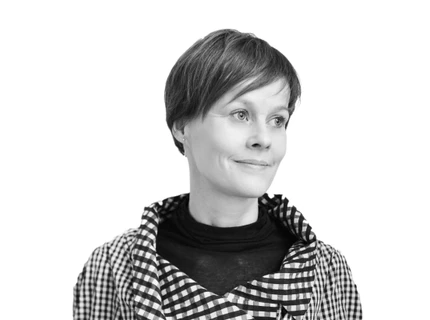
- Play can help us understand children who experience the world in ways that may be unfamiliar to us. I look forward to learning from the children, giving them greater ownership of their everyday lives and ensuring that their perspectives make a real difference. This will allow us to create, develop and co-design the spaces and conditions they need to live, participate and thrive. Play Design has an important role to play in addressing challenges around children's wellbeing, and I am excited to develop new knowledge in this area, explains Professor Helle Marie Skovbjerg, who leads the research programme.
She points out that play and design are closely connected because both begin with curiosity and exploration, rather than simply confirming what we already know.
The LEGO Foundation: We need new approaches to research
The partnership builds on many years of close collaboration and mutual trust between the LEGO Foundation and Kolding School of Design. The school has extensive experience of using design to create positive change in people's lives – an important strength in the effort to develop more inclusive communities.
- We want a society where every child , regardless of their needs or circumstances, feels valued, understood and have meaningful opportunities to participate in the communities and environments that shape their lives. Achieving this requires new knowledge and effective solutions. Kolding School of Design has shown how play and design can open up new avenues for research. Through our support, we want to build on this experience and explore how we can create environments where more children can participate, contribute and feel that they truly belong says Annika Vathnamar, Head of Special Educational Needs at the LEGO Foundation.
Designing better everyday lives for children and young people
The research will be carried out in close collaboration with a number of Danish municipalities, with solutions developed and tested in schools and early years settings across Denmark. This will ensure that the research reflects different local, geographical and social contexts.
Children will also be involved through new participatory methods, recognising that their own experiences are essential to understanding play, belonging and wellbeing.
- We can only address the challenges children face by designing solutions from the perspectives of children and young people themselves. This is where design can make research more tangible. Our ambition is not simply to generate new academic knowledge, but to translate it into tested approaches and practical solutions that teachers and early years educators can draw on in their everyday work, says Associate Professor Karen Feder, Lab for Play Design, Kolding School of Design.
Press contacts:
Pernille Stausbøll, Head of Communications, Kolding School of Design
pst@dskd.dk
+45 40 98 58 85
Mads Hvitved Grand, Head of Communications, the LEGO Foundation
mads.hvitved.grand@legofoundation.com

Carina Christensen, Rector of Kolding School of Design, sees the LEGO Foundation's DKK 38.8 million investment as an important recognition of the school's ten years of pioneering research in Play Design – and an opportunity to translate that knowledge into meaningful change for children with special educational needs.
- Building Belonging Together is a five-year research programme at Kolding School of Design, running from 2027 to 2031, with DKK 38.8 million in funding from the LEGO Foundation.
- The programme will investigate what children in Denmark play today – in their own words.
- Centred on neurodivergent children's own perspectives, the programme aims to develop research-based, practical and playful approaches that strengthen children's opportunities for play, wellbeing, participation, friendship and belonging in early years settings and schools.
- The programme will directly involve 3,000 children and 200 teachers and early years educators in child-centred methods, playful approaches, interventions and the co-design of new solutions.
- Building Belonging Together is led by Professor Helle Marie Skovbjerg.
- Over the five-year period, the research team aims to publish 50 academic research papers.
- Kolding School of Design will collaborate with international research institutions, including Monash University in Australia and Western Norway University of Applied Sciences (HVL), drawing on expertise in children's wellbeing, play and co-design.
- As part of the programme, Kolding School of Design will establish an open-access digital knowledge hub, giving teachers, educators, school leaders and other professionals access to research findings, design principles, methods, guidance and practical tools.
- Over the past decade, Play Design research at Kolding School of Design has helped transform the understanding of play – from something primarily associated with childhood and leisure into an internationally recognised design discipline, approach to understanding people and perspective on society.