When editorial design meets reality
How do you communicate art through publications? How do you balance typography, image editing and narrative? These are some of the questions the students have been working with – and they are now presenting their proposals with Louisiana in the room.
According to Lærke Rydal Jørgensen, the collaboration with Kolding School of Design is highly valuable for Louisiana. She points out that it is inspiring to see how emerging designers approach the task and challenge existing formats.
- For Louisiana, it is important to collaborate with young designers. We have a strong design tradition, and it matters to us to keep an eye on new movements. We must not stagnate; we have to keep pushing boundaries. Working with the students from Kolding School of Design brings us new voices who do things differently and surprise us, she explains.
A realistic case with high ambitions
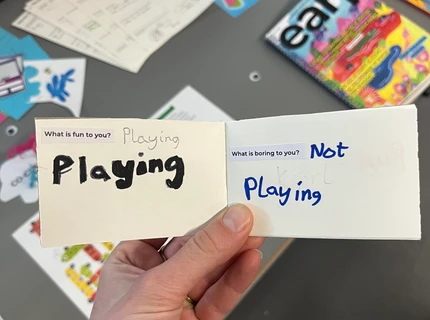
Rikke Hansen, lecturer in communication design at Kolding School of Design, has structured the course with the ambition of giving students a realistic and professional point of departure. They have worked with Louisiana’s publications and explored how museum visitors can take an experience home with them in the form of a printed piece.
- The more our students can practise professional methods, the better prepared they are for the demands and opportunities that real life brings, says Rikke Hansen.
For her, it is about training students to navigate an existing identity while still bringing something new to the table.
- In addition to developing their creative skills, students learn to interpret and respond to a client brief, reflect on their own choices and dare to make bold decisions – even when that means challenging the brief. That is what shapes their future professional practice, she says.

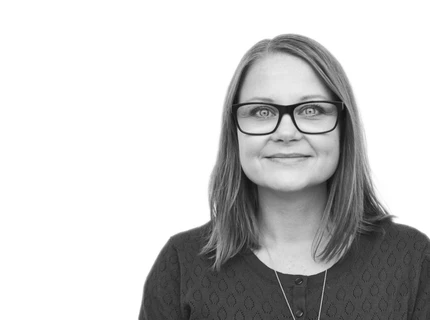
Lærke Rydal Jørgensen, Head of Publications at Louisiana.

Feedback from the real world
For Siggie Bolander Jakobsen, a student at Kolding School of Design, it is a special experience to present to an organisation that produces publications at a high international level.
- It means a great deal to us as students to present our project to Louisiana, because it simulates what a real client meeting is like. It gives us an idea of what it means to collaborate with an editor and with a stakeholder who is not a designer. And we get a glimpse of a professional world we hope to become part of, she says.
The direct dialogue with practice offers insight into the industry’s expectations, decision-making processes and standards of quality. For Louisiana, meeting the students is both a source of fresh perspectives and a way of staying connected to the next generation of designers.
- Quite concretely, collaborations like this may also allow us to spot new design talents we would like to work with further. But it is also about keeping up with what younger generations are doing. That is absolutely essential, she says.
Louisiana and the next generation
For Louisiana, the collaboration is not just a teaching exercise – it is a way of keeping the museum alive and relevant.
- Just as we acquire contemporary art for the collection and bring young artists’ perspectives into the museum, it is equally important to bring young designers’ perspectives to the institution we are. In design, it is crucial that we do not only address audiences aged 60+, but that younger people also feel seen and reflected. They need to feel that we are keeping pace with the times at Louisiana, says Lærke Rydal Jørgensen.
This is the first time Louisiana has served as a case in the ‘Editorial Design’ course at Kolding School of Design, and the collaboration reflects a shared ambition to develop the field.
- When professional partners are invited into teaching – and are at the same time genuinely curious about students’ perspectives – a space emerges where both education and practice can learn from one another, says Rikke Hansen.

Siggie Bolander Jakobsen studies Communication Design.