When experience meets curiosity
Extraordinary things can happen when two kinds of energy meet in nature. When heat meets cold, lightning can illuminate the sky. When energy from the Sun meets the Earth’s magnetic field, the result can be the Northern Lights.
This story is not about forces of nature, but about something else that can happen when two different kinds of energy come together. It is the story of professional know-how meeting emerging talent – of an encounter between Adidas and Kolding School of Design. The results can be experienced at Kolding Design Days 2026. But more on that later.
The story of this creative encounter begins with the course Concept, Collection & Production. The ten-week course challenges second-year Bachelor’s students in Accessory Design to create a fictional collection for a real brand. The aim is to give students first-hand experience of what it means to work professionally with design in a commercial context, culminating in a series of prototypes for new designs that could realistically sit within the chosen brand.
“It is incredibly valuable for students to go through a design process with input from industry. It gives them a much more tangible sense of how their skills can be applied once they graduate,” explains Solveig Gubser, course leader at Kolding School of Design.
This time, the industry collaboration took the students to Adidas. As a highlight of the course, they travelled to Germany to spend a week at the company’s headquarters in Herzogenaurach as part of an ERASMUS+ internship. Here, they visited the MakerLab and worked with experienced adidas mentors as part of the MakerLab Mentorship Programme.


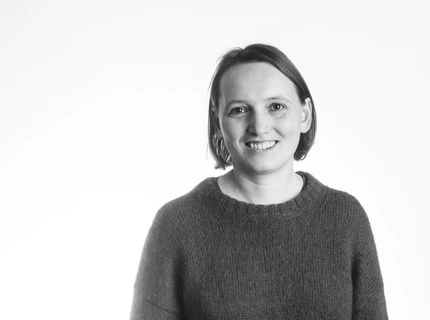
Solveig Gubser is course leader at Kolding School of Design and was part of the academic collaboration with Adidas.
Photo: Oliver Båge
A creative meeting place
MakerLab opened in 2016 and is built around three core values: “Inspire, Empower and Connect”. Its team of experienced designers and product specialists acts as a sounding board for Adidas’ developers while also exploring new design directions for different collections. Think of it as a creative space for experimentation within Adidas’ wider development environment.
It was within this setting that the collaboration with the design students took shape. A fundamental part of MakerLab’s philosophy is to connect different areas of expertise and remain open to new influences by inviting external perspectives into the creative process.
“The purpose of taking part in the project was to encourage the students to experiment more and to work with us in a realistic setting. At the same time, we were curious about the energy they would bring and about their ideas and perspectives as the next generation of designers. It turned into a very rewarding exchange,” says Jordi Closa, Head of the MakerLab Network at Adidas.
And that is exactly what happened. As the culmination of the ten-week course, the students had the opportunity to work side by side with Adidas designers, transforming their ideas into physical materials and prototypes.
“It was a fantastic experience having the students with us in MakerLab. During that week, we gained a real insight into the creative courage of young designers, while the students had the opportunity to meet our mentors and work in close proximity to a professional design environment. We learnt a great deal from sharing the space with them,” says Jordi Closa.
One thing that particularly stood out to him was the students’ level of craftsmanship:
“The students from Kolding are used to working with their hands, and it shows. Their approach to materials such as leather, and their sensitivity to how materials behave through different processes, surprised us. The level was unexpectedly high,” he says.

Jordi Closa invited the design students into MakerLab to exchange experience and ideas during their week-long study visit to Adidas.
Photo: Solveig Gubser
Leaving a mark
One of the things that stayed with the MakerLab team after the students had returned home was their unexpectedly high level of craftsmanship – something that was also evident in the prototypes they created. According to Jordi Closa, the week also sparked valuable conversations and reflections within MakerLab.
“The prototypes turned out to be really exciting, and there was a great deal of interest in seeing them here. But for me, exchanges like this are first and foremost about both sides taking something away from the experience: the students from meeting our mentors and experiencing the way we work, and us from their energy, craftsmanship and perspective on materials,” he says.
Back in Kolding, student Sidsel Hesth Schmidt stands beside the prototypes produced at MakerLab during the course. For her, the week was an opportunity to encounter a way of working that resonated strongly with her own approach to design: starting with the material itself, and exploring what it can do when given the time and space for experimentation.
“MakerLab has shown me that it is possible to work as creatively and freely as I dream of doing. It was incredibly inspiring to experience a workplace where creative curiosity really is at the heart of the job. It has opened up an entirely new idea of where I might end up as a designer. That is an exciting thought – and very motivating,” she says.
Solveig Gubser, course leader at Kolding School of Design, sees the collaboration both as a vote of confidence in the students and as valuable professional experience they can carry with them into the future.
“It is one thing to tell students that the industry is waiting for them out there. It is something quite different for them to experience it themselves and to be told that their work has real value,” she says.
Which brings us back to the opening question: what happens when MakerLab and Kolding School of Design meet in a creative collaboration?
The answer can be seen right now at Kolding School of Design, where an exhibition presents the students’ prototypes for new footwear developed through their work with Adidas.
The exhibition is part of Kolding Design Days 2026, which takes place from 1–3 October and is free to visit. During the event, visitors can join guided tours of Kolding School of Design, explore a number of exhibitions and visit the studios that form the setting for both the school’s degree programmes and its design research.

Design student Sidsel Hesth Schmidt with the prototypes she created during the creative process at MakerLab.
Photo: Oliver Båge