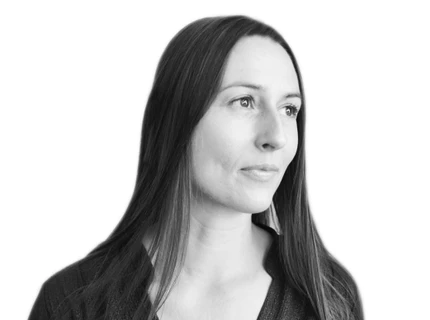
Line Rumhult’s PhD project explores handmade, connected artefacts and how digital technology can be experienced through the body, materials and movement. The project was part of Kolding School of Design’s exhibition at 3daysofdesign in 2026, where audience interaction with the artefacts generated new insights that Line has since carried forward into the development of the next artefacts.
When design changes the way we experience technology
For Line, the PhD project is not only about finding new ways of experiencing the Internet of Things – IoT. It is also about what design as a discipline can contribute to the development of technology.
- It requires us to insist that our expertise can challenge and expand what technology is and what it can do.
In our technology-driven society, we are surrounded by digital products connected through networks – what is known as the Internet of Things, or IoT. These might include phones, watches and other smart products that register, send and respond to data. They typically communicate with us through text, light, sound or vibration.
Line is exploring what happens if that connection instead becomes physical and material – something we experience through the body.
- I’m exploring how the digital connection we know from smart and connected objects can become something we feel with the body rather than read from a screen. I work on making that connection physical and material through handmade artefacts, she explains.
More specifically, she is investigating how working physically with craft and materials can give IoT a sensory and aesthetic expression.
- What I call a material translation of the properties of technology is about taking the technical elements – what senses and what responds – and treating them as a material you can shape. And I’m exploring how the connection can be experienced through the body when it is shared between people rather than between a person and a machine.
The artefacts are the investigation
Line is two years into her three-year PhD. The project is artefact-based, which means that the things she designs and makes are not simply outcomes of the research. They are part of how the research itself is carried out.
- The artefacts I design and make are part of the research itself. They are the method through which I investigate and conduct the research. In an artefact-based PhD, the artefacts and exhibitions form part of the thesis alongside the written work.
In other words, she is not simply researching the artefacts – she is researching through them.
- When I make an artefact, I investigate something through the making itself, through the choice of material and construction. The artefacts are the tools I use to think and investigate with. They are not products in the conventional sense, but exist at the intersection between a technological design object and a tool for creating new knowledge, she explains.
Some of that knowledge is difficult to capture in words alone.
- When I work with physical artefacts, I discover sensations and responses in the material that I could not have imagined beforehand. It is about the tactile and the bodily, and that is difficult to capture in words alone. The artefact gives me knowledge through the hand and the body – knowledge that is felt. Without that knowledge, an important part of the understanding would be missing.
Here, technology is made physical through the material.
- These are technical properties that I try to make physical, so the artefacts can respond to the signals sent to them through IoT. A tactile sensation is difficult to describe; it has to be felt. And the whole premise of the project is to transform something intangible into a physical outcome.

The artefacts are not simply outcomes of the research, but part of the method itself. Through making, Line explores how technological properties can be translated into physical and sensory expression.
“We have been discussing for a long time, as a society, how connected and online we should be. More and more of the things around us are connected. Could we be connected in a more sensory and empathetic way? And what can the material offer that the purely technological cannot?”
Artefacts with different roles
The artefacts perform different functions throughout the project.
- They are experiments that give me answers and raise new questions. The artefacts also have specific roles in my research. Some I use to map a field of material and technological possibilities. Some are prototypes, where I test and refine an idea through the process of making. Some stage the encounter with the body, where the investigation takes place through bodily interaction. And some are tools I build myself so I can work with what senses, what responds, and the connection between them as a material.
Each experiment forms the basis for the next.
- I follow each process as a progression – from the initial idea, through making, to exhibition and reflection afterwards. In that way, the work constantly moves between trying, questioning and understanding.
When the artefacts respond
Along the way, a kind of dialogue develops between Line and the materials and artefacts she works with.
- On one level, the artefacts speak to me throughout the making process. A material I am working with, or an artefact in its finished form, expresses or responds in a particular way that tells me something I can use in designing the next ones.
Line describes these as material dialogues or material negotiations.
- A negotiation between the material and the person shaping it, which unfolds through the craft process. A large part of the work is about developing a sensitivity to what the materials are telling me.
But another layer emerges when the artefacts leave her hands.
- I am deeply involved in the process of designing the artefacts, but other people encountering them for the first time have a different perspective on what they are and what they do. Some experience and interpret them better than I can myself, while others have no idea what to do with them.
For Line, both kinds of response are valuable.
- In that way, the audience sometimes reads the artefacts more subtly than I do myself, and sometimes less so. It is very interesting to receive both kinds of feedback.

Material, weight, balance and movement are central to Line’s work on making digital signals physically perceptible.
A stronger insistence on body and craft
Two years into the project, Line’s approach has become increasingly consistent.
- What has shifted most is an even stronger insistence on investigating through craft and the body. I’m not looking at technology, systems and networks for technology’s own sake – there are others who do that. My task is to investigate what technology can do through materials, when technological properties are translated into material form.
Over time, she has developed what she describes as an increasingly dogmatic approach to keeping the investigations non-textual.
- The technological element must not be light, sound or text. I work only with the possibilities of the material and what can be read through the body as a method. What might normally be read with the eyes or ears should instead be felt through the body. The question is what technology can do when material takes the lead.
As Line began to look more deeply into her field of research, she also made a discovery that helped shape the direction of the project.
- I was surprised that accessory design as a discipline is not more widely represented, and that many technological artefacts are based on some form of textual or visual expression and to a lesser extent on a tactile expression that is felt on the body.
An artefact made to meet the world
The artefacts develop step by step, with each stage forming the basis for the next. This makes it difficult for Line to point to one particular artefact as the decisive one.
Even so, there was a clear leap forward with the first pair of technological artefacts.
- In that pair, the technological elements are fully implemented, so it brings together the threads of what I want to test through the project – materially, bodily and technologically.
With the artefact pair, the relationship with the outside world also changed.
- The earlier artefacts were methodological tools for my own use, while the artefact pair was created much more to meet the world.

The first pair of technological artefacts marked an important step forward in the project. It brought together the material, bodily and technological strands in artefacts designed to meet the world.
“With our strong design expertise, we can help offer alternatives to ‘technology for technology’s sake’. This is where we as designers can help shape the future of design.”
From 3daysofdesign to Dutch Design Week
When Line showed earlier versions of the artefacts at 3daysofdesign in June, the audience’s interactions became part of the material she could take forward in the research.
- That is exactly what happened after 3daysofdesign, where the audience’s interactions gave me material that I have used to develop the next artefacts.
In October, the investigation continues at Dutch Design Week.
- Right now, I’m designing the experience I want to create for the audience at Dutch Design Week. Artefact-based research is deeply rooted in a physical process, and that will be reflected in my exhibition.
There, visitors will encounter both material experiments from the process and the connected, bodily artefacts.
- I’m working on a set of new artefacts as well as updated versions of those I exhibited at 3daysofdesign in June. Visitors will encounter six artefacts which, through their connection, can communicate with one another through movement and material, Line explains.
At Dutch Design Week, the exhibition is therefore not simply a setting for presenting the research.
- My artefacts need to be interacted with. It is in the bodily encounter that they come alive and reveal what they are designed to do. For me, it doesn’t make sense to talk about them. I want to speak through them.
When other people use the artefacts, the encounter itself becomes part of the investigation.
- They are a catalyst for the idea development that came before them and for the design brief they were created from, but they begin to live when other people use them. It is in that encounter that I can observe, and others can reflect on, what they are, what they do and what they can do.
What do others feel?
At Dutch Design Week, Line is particularly curious about how practising designers encounter the artefacts.
- Designers are trained in an aesthetic discipline and have a highly developed sensitivity to materials, so they are good at giving feedback on this kind of interaction.
But her interest extends beyond the design community.
- The craft and aesthetic choices may have been made with a design context in mind, but I’m interested in every body that is curious about what the artefacts do and is willing to give me feedback on their experience.
That is precisely why encountering a large and diverse audience is interesting for the project.
- At the same time, the exhibition forms part of the thesis itself, so showing the artefacts out in the world is not only a form of communication, but part of the research.

When other people interact with the artefacts, their responses become part of the research. The audience’s encounter with the works can give Line new perspectives on what the artefacts are and what they can do.
“I hope to have shown that the properties of technology can be translated into material form and shaped through craft. I also hope to have offered an example of how IoT can take on a bodily expression that can be felt. And I hope the artefacts themselves can stand as a concrete example that others – both designers and researchers – can build on.”
Could we be connected differently?
Behind the individual artefacts lies a broader question about our relationship with connected technology.
- We have been discussing for a long time, as a society, how connected and online we should be. More and more of the things around us are connected. Could we be connected in a more sensory and empathetic way? And what can the material offer that the purely technological cannot?
Line hopes visitors to Dutch Design Week will leave with a sense that a digital connection can be something other than the limited range we know from most connected everyday products.
- It can also be tactile, felt and physically present – something you experience between people through a material.
She also hopes the encounter with the artefacts can create a particular kind of awareness.
- I also hope the experience creates a sense of attention and presence, where you are present in your own body and in the encounter with another person – something the artefact can initiate. If people leave seeing connected objects in a new way, then the artefacts have done something.
And perhaps this can open up new ways of imagining connected design objects in the future.
- Perhaps it can also prompt us to think about how future connected design objects might be designed with far greater attention to sensory and tactile qualities – as a new form of connection with other people.
A design contribution to technology
The broader perspective introduced at the beginning of the article returns here: what can design as a discipline actually contribute to the development of technology?
- It requires us to insist that our expertise can challenge and expand what technology is and what it can do. We must be willing to challenge technologies that are not immediately intuitive within a design context and contribute our ability to interpret how technology can become tactile and sensory.
For Line, craft can act as a catalyst in that development.
- Craft can be a catalyst for that development. With our strong design expertise, we can help offer alternatives to ‘technology for technology’s sake’. This is where we as designers can help shape the future of design.
From this perspective, the specific expertise of accessory design becomes central: a discipline trained in shaping materials in relation to the body.
- Accessory designers are trained in material manipulation and bodily constructions, Line says.
That is precisely the expertise she wants to bring into work with IoT.

Earlier versions of the artefacts were shown at 3daysofdesign. The experiences and insights gained there have helped shape the next artefacts, which Line will present at Dutch Design Week.
The next experiment
So far, Line has primarily explored what happens in the felt connection between two people standing opposite one another.
At Dutch Design Week, she will expand the investigation.
- At Dutch Design Week, I’ll extend this into scenarios where I explore what happens when the connected bodies are no longer standing opposite one another, but are separated by distance and cannot see each other. What does that felt encounter look like then?
She will take that question with her into the final part of the PhD project.
By the end of the project, Line hopes to have shown that the properties of technology can be translated into material form and shaped through craft.
- I hope to have shown that the properties of technology can be translated into material form and shaped through craft. I also hope to have offered an example of how IoT can take on a bodily expression that can be felt. And I hope the artefacts themselves can stand as a concrete example that others – both designers and researchers – can build on.
For Line, there is particular potential in the relationship between accessory design’s material and bodily expertise and connected technology.
- The greatest contribution, for me, would be to open up a way of working with connected technology in which material and the body are the starting point. Accessory designers are trained in material manipulation and bodily constructions. That is exactly what I hope to explore through my PhD, so they can contribute to what IoT might become in the future.
You can meet Line Rumhult at Dutch Design Week, 17–25 October 2026.
Venue: Design Perron – VGZ Building, Kennedyplein 300, Eindhoven, the Netherlands

At Dutch Design Week, visitors will encounter six connected artefacts that can respond to one another through movement and material. The exhibition is not only a form of communication, but part of the research itself.